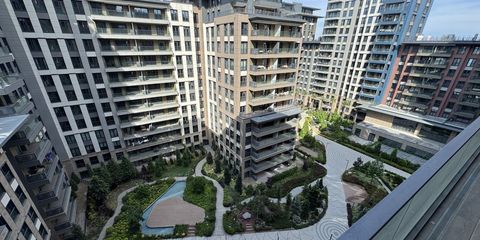
The management of your complex (the site, in Turkish) votes an extra charge for roof insulation; the tenant asks "am I paying for this?", the landlord answers "the aidat is the tenant's business". This argument plays out in almost every managed building in Istanbul several times a year, and the answer is actually written in the legislation. The division fits in one sentence: costs arising from use belong to the tenant; investment in the property belongs to the owner.
This guide is for anyone who owns a flat in a Turkish apartment building or complex, especially from abroad, where the monthly aidat (service charge) arrives as an unexplained line on a statement. It opens that one sentence item by item, settles the most contested examples, and recaps the deposit rules.
The legal ground: two laws read together
- The Condominium Law (KMK) places the common-expense obligation on the unit owner. The building management can always pursue the owner for unpaid aidat; the tenant paying does not remove the owner's liability (the tenant shares liability to the extent they pay, capped at their rent debt).
- Article 341 of the Code of Obligations (TBK) governs the internal relationship: unless the lease says otherwise, the tenant pays the costs connected with the use of the property.
So the management's counterparty is the owner; between owner and tenant, the "usage cost or investment?" test decides. This is why writing an explicit aidat clause into the lease ends most of these arguments before they begin.
Item by item: who pays what?
| Expense item | Who pays? | Why |
|---|---|---|
| Doorman, cleaning, security | Tenant | Day-to-day usage service |
| Communal electricity and water | Tenant | Usage cost |
| Routine lift maintenance | Tenant | Ordinary upkeep of use |
| Pool and gym operation | Tenant | A service enjoyed while living there |
| Full lift replacement | Owner | Capital investment |
| Roof, façade, exterior insulation | Owner | Investment in the property's value |
| Structural strengthening | Owner | Structural improvement |
| Renovation of the caretaker's flat | Owner | Capital in nature |
| Building insurance, communal DASK (compulsory earthquake insurance) | Owner | Cost attached to ownership |
The practical litmus test: could the building function without this expenditure, and does the expenditure permanently increase the building's value? Work that adds value and will serve for years is the owner's; this month's cost of a running service is the tenant's.
Mixed aidat bills: the most common dispute
Building managements usually announce a single aidat figure that mixes both categories — cleaning and staff alongside a "renewal fund" or "capital contribution". A worked example:
Monthly aidat: ₺6,000. The management's operating plan shows ₺4,500 for staff, cleaning, electricity and routine maintenance, and ₺1,500 collected for repainting the façade. The correct split:
- Tenant: ₺4,500 (usage costs)
- Owner: ₺1,500 (investment fund)
The tenant paying the full ₺6,000 is common but wrong, and so would be the owner absorbing the whole bill. The fix is simple: request the operating plan (işletme projesi) from the management, separate the line items, and record the agreement in writing. The same split applies to lump-sum contributions to major works billed at year-end.
Inside the flat: maintenance versus repair
The same logic runs inside the flat:
- Small, ordinary upkeep is the tenant's: tap washers, bulbs, the boiler's annual service, a blocked drain — minor items arising from use.
- Substantial repair is the owner's: replacing the boiler, renewing the plumbing, window frames — everything that comes from ageing rather than use.
Damage caused by the tenant's fault (a broken window, damaged walls) is the tenant's in every case, and can be set off against the deposit at handover.
The deposit: the three-month cap and safe keeping
Article 342 TBK is explicit: in residential leases the security deposit cannot exceed three months' rent. If the rent is ₺30,000, the deposit tops out at ₺90,000. A "six months' deposit" demand is contrary to law.
The lesser-known half of the rule is the keeping method: a cash deposit is supposed to go into a term bank account that the tenant cannot withdraw without the landlord's consent. In practice deposits are mostly handed over informally, which is the main source of "I paid it / no you didn't" disputes when the relationship sours. At minimum: a bank receipt and a clear deposit clause in the lease.
On return: when the tenancy ends, the deposit is returned unless the landlord has raised a written claim against it. Set-off for damage and unpaid debts is legitimate; an automatic "repainting fee" deduction is contestable so long as the wear is ordinary. A photographed handover protocol at move-in and move-out protects both sides.
The arguments we get asked about most
The tenant isn't paying the aidat and the management is chasing me. What can I do? You have to pay: liability toward the management sits with the owner. You then recover from the tenant. If the lease clearly assigns the aidat to the tenant, unpaid aidat can be pursued like rent debt with formal notices, and persistent breach can ground an eviction argument. Early, written notice keeps the debt from growing. For owners abroad, aidat monitoring is a standard part of property management.
The flat was sold; what happens to the deposit? The tenant's deposit claim travels with the tenancy to the new owner — so in a sale negotiation the deposit's transfer must be discussed and written into the handover protocol. A seller who walks away saying "I took the deposit, not my problem" leaves the new owner facing the tenant's claim.
Does the deposit increase each year with the rent? No — there is no automatic uplift in the law; the amount given at the start is the amount. In long tenancies the deposit becomes symbolic; it can be updated by mutual agreement at renewal, never imposed unilaterally.
What the owner should do
- Write it into the lease. One sentence does it: "usage costs within the aidat belong to the tenant; capital and investment expenditure to the landlord". With the deposit amount and return conditions added, it prevents most of the arguments above.
- Follow the operating plan. Owners who don't live in the building miss the management's decisions; major-works votes concern your pocket, so attend the meetings or appoint a proxy.
- Keep payments traceable. A tenant's unpaid aidat comes back to you via the management, so track rent and aidat monthly — through the bank, never in cash.
We run this monitoring on owners' behalf as part of our management service; see what the service covers. And if a renewal is coming up, two quick checks are worth the minutes: the legal increase ceiling in the rent increase calculator, and your flat's current market rent through a free valuation.