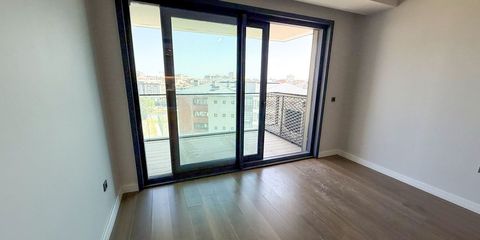
Your tenant hands the keys back on a Tuesday morning in Istanbul; you are in London, and you hear that evening that the flat is empty and the keys are with the doorman. Two weeks later somebody goes in and finds a broken cupboard door and a hole in the bathroom wall.
The question that follows is always the same: I deduct that from the deposit, right?
Usually the answer is no — not because the damage is not real, but because of what was not done on the day the keys moved. This guide covers the exit: who stands in your flat, what evidence is worth anything later, what you may charge for, and how the depozito (security deposit) has to be handled. The move-in side is in what a Turkish rental agreement must include.
The inspection you skip is the claim you lose
Article 335 of the Turkish Code of Obligations (TBK) gives the landlord a two-line duty with a very sharp consequence:
The landlord is obliged to inspect the condition of the property when it is returned, and to notify the tenant immediately in writing of the deficiencies and defects for which the tenant is responsible. If this notification is not made, the tenant is released from all liability.
Read that last sentence again. Taking the keys and saying "I will look at it later" has the same effect as giving the claim up.
One exception: deficiencies that could not be seen on an ordinary inspection — a leak inside a wall, a boiler fault that shows only in winter. The rule there is identical: immediately, in writing. "Immediately" is not decoration; waiting dissolves the right.
So: handover is not the moment the key changes hands, it is the moment the joint inspection ends.
Somebody has to be in the room, and able to sign
A video call is not an inspection: the tenant picks the angles, nobody reads the meters, no one signs anything. Article 335 needs a person in the flat with the tenant, on the day, with authority to act for you — a relative with written authority, someone holding a notarised power of attorney (vekaletname) who can also handle the bank and utility steps, or your managing agent, for whom this is routine property management work. Agree in advance what they may settle on the spot: their job is to record, not negotiate.
What counts as evidence a year later
The teslim tutanağı (handover protocol) is fifteen minutes of work, and it is the written notification Article 335 demands:
- Date and time. Rent runs until the keys actually come back.
- Room-by-room condition, against the move-in record. "Living room: clean" is a finding too.
- Fixtures (demirbaş). White goods, air conditioning, boiler, cupboards: how many, and working or not.
- Meter readings. Electricity, water, gas — written down and photographed.
- Key count. Flat, building entrance, post box, car park remote.
- Every deficiency, item by item, and two signatures.
Photographs are attachments to it, not a substitute: same day, same angles as the move-in set. Without move-in photographs, exit ones prove little alone.
If the tenant will not sign, draw it up anyway and serve it in writing that same day, through a notary (noter) or by registered post with return receipt (iadeli taahhütlü). A served protocol with no signature beats a signed one nobody delivered.
What you can charge for, and what you cannot
Article 334 TBK draws the line:
The tenant is obliged to return the property at the end of the lease in the condition in which it was received. However, the tenant is not liable for the wear and deterioration arising from use in accordance with the contract.
The distinction is damage against ageing, not "like new" against "not like new". A flat lived in for three years is entitled to look like one.
| You cannot charge (ordinary wear) | You can charge (use contrary to the contract) |
|---|---|
| Paint fading, slight yellowing | Big holes where fixed furniture was pulled off, scored surfaces |
| Furniture marks on parquet, matt lacquer | Parquet swollen with water, gouged or broken |
| Hinges working loose, a tired drawer runner | A snapped cupboard door, a counter torn off |
| A tap washer at the end of its life | Pipework burst by freezing, a blocked waste |
| Silicone yellowing with time | A bathroom unventilated to the point of mould |
| The boiler's annual service falling due | An appliance failed through neglect, a radiator removed |
One more door is shut: an undertaking given in advance that the tenant will pay compensation beyond remedying damage from use contrary to the contract is invalid. "The flat shall be handed back freshly painted" is not a route to billing ordinary wear.
Approving a deduction you cannot see
You are authorising spending on damage you will never see. Keep the order:
- The item has to be in the protocol. Not recorded and notified on the day, not a deduction.
- Photographs before anything is touched. Repairs destroy the evidence.
- A written quote (teklif), ideally two, naming the work and the price.
- Your approval in writing, item by item. "Go ahead with the cupboard door at the quoted price" is a record; "do whatever is needed" is not.
- The invoice. Deduct the documented figure, never a rounded one.
Round numbers collapse first: a flat ₺15,000 "for cleaning and paint", with no protocol entry and no invoice behind it, is the most contestable move an owner can make. What remains goes back without delay.
The deposit: what the law actually allows
Article 342 TBK sets three limits on the depozito — güvence bedeli, the security sum, in the legislation. How the first two bite at move-in is in aidat, repairs and the deposit.
The ceiling is three months' rent in residential and roofed-workplace leases.
The money is not supposed to sit in your account. Cash security goes into a term savings account that cannot be drawn without the landlord's consent, and the bank releases it only on both parties' consent, a finalised enforcement proceeding or a finalised court judgment. Deposits are usually taken by hand and held by the landlord instead — worth doing knowingly, since it is not what the law describes.
A three-month clock runs from the end of the lease. If within three months of the lease ending you have not notified the bank in writing that you have brought a case, or started enforcement proceedings, against the tenant over the lease, the bank must return the security to the tenant on request. There is no right to hold a deposit indefinitely as a precaution — so the exit has to be handled in weeks, not on your next visit.
Utilities, aidat and keys
- Electricity, water and gas. The tenant closes the accounts in their own name. If they do not, the debt sits in their name but is chased through your property, and the next tenant cannot transfer the supply. The meter readings end that argument.
- Aidat (the building's monthly service charge). Get written confirmation from the building management that nothing is outstanding. Unpaid aidat is pursued against you as the owner, whatever the lease says.
- Keys. Until every key is back, the flat has not been handed over. A barrel change for missing keys is a reasonable cost, and goes in the protocol.
If instead the tenant leaves early or disappears, their liability for the remaining term comes into it — a separate track, covered in evicting a tenant in Turkey.
The week the flat goes quiet
Once the protocol is signed, every cost lands back on you: aidat, property tax, DASK (compulsory earthquake insurance), and the deterioration an empty flat manages with nobody checking the stopcock. Decide now who looks after it in the gap — that is what vacant property care is for.
Four rules for handover day
- Never take keys without inspecting (TBK 335).
- Notify deficiencies immediately, in writing — the protocol is that notice.
- Wear is not damage. Deterioration from contractual use is not the tenant's debt (TBK 334).
- Deposit: three months' rent as the ceiling, a three-month clock from the end of the lease (TBK 342).
If your flat is coming back to you this autumn and you will not be there, tell us the handover date. We can stand in it for you, run the protocol properly, and take it through to the next tenancy.