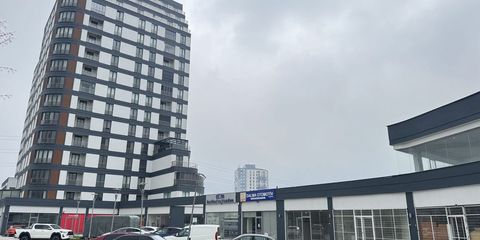
If you own a flat in an older Istanbul building, there is a reasonable chance somebody will eventually propose demolishing it and rebuilding. That process is kentsel dönüşüm, urban transformation. For an owner living abroad it arrives as a sequence of decisions taken at meetings you cannot attend, on deadlines nobody sends you, about money that mostly does not pass through your hands.
This guide covers the whole arc: how a building becomes eligible, who decides, what the state pays, what it costs you, and what to do on the day you are handed the keys to the new flat. If your building has already been rebuilt and you have just taken delivery, the last two sections are the ones you need.
How a building enters the process
A building qualifies when it has been assessed as a riskli yapı, a risky structure, by a licensed organisation under Law 6306. Two features of that assessment matter to an owner abroad.
First, a single owner can start it. You do not need your neighbours' agreement to have the building assessed. One flat owner applying is enough to put the whole block into the process.
Second, the objection window is short. Once the assessment is served, there are 15 days to object to the technical board. Fifteen days is not long when notice is going to a Turkish address you have not lived at for years. If you own here and do not live here, make sure the building management and your own representative know how to reach you quickly, because this clock does not wait for the post.
The four conditions
Most buildings that fall out of the support package fall out on one of these.
The risky-building assessment must be complete. As of the September 2026 extension, it has to be finished by 31 December 2027. That is closer than it looks: assessment, architectural project, building permit and a contractor agreement is a chain that runs for months before anything is demolished.
The permit date. The architectural project has to have been prepared or approved after 1 April 2023. Buildings proceeding on an older project are outside the scheme.
The 1.5x rule. The new building cannot exceed 1.5 times the old one. Breaching it does not reduce the support, it removes it entirely. One piece of good news: the car parking and shelter areas that Istanbul's building regulations require are excluded from that calculation, so adding enclosed parking does not put the support at risk.
Unpermitted additions (illegal extra floors, unregistered units) are excluded from the support calculation.
Why the 1.5x rule changed the whole negotiation
This looks like a technical footnote and is in fact the single thing that determines how your negotiation will go.
The classic Turkish model is kat karşılığı, flat-for-land. A contractor rebuilds the block at no cash cost to the owners and takes their profit from the surplus flats the new, larger building contains. That model only works if the new building is materially bigger than the old one.
The 1.5x ceiling squeezes exactly that surplus. The consequence is blunt: in most buildings there are no longer any free flats to hand the contractor. Either the owners pay the difference themselves, or they use the state package. The grant and the loan exist precisely to fill that hole.
What this means at the table: the negotiation is no longer "how many flats will you give us". It is "what is the cost per square metre, how much of that do the grant and loan cover, and who pays the rest". Owners who arrive with the reflexes of the old model tend to find the conversation stalls.
What the support package contains
Per independent unit, as announced under the current campaign:
| Grant (not repaid) | Loan (repaid) | |
|---|---|---|
| First home | ₺875,000 | ₺875,000 |
| First business premises | ₺437,500 | ₺437,500 |
| Additional homes | — | up to ₺1,750,000 |
| Additional business premises | — | up to ₺875,000 |
The loan terms are what make the package unusual: a 24-month payment holiday from the date the building permit is issued, then a term of up to 10 years. The first 12 instalments are interest-free, and the balance thereafter is revised at half the annual consumer price index. There is no income, credit-score or age test. A debt revised at half of inflation is a debt that shrinks in real terms every year, which is not something the mortgage market offers.
There is also a one-off ₺125,000 relocation payment, and here is the part that catches foreign owners. It is paid to the person actually living in or trading from the unit, not to the owner. If your flat is let, the relocation payment belongs to your tenant, not to you. Separately, whoever receives the relocation payment cannot also claim the monthly rent assistance; it is one or the other.
Money does not reach owners as cash in any case. It is released to the contractor in four stages against construction progress (30%, 30%, 30% and 10%). You are not administering a budget; you are watching a schedule.
These are the amounts announced under the current campaign and they are revised periodically. Before you commit to anything, confirm the current figures with your district municipality's urban transformation unit and with the Ministry of Environment, Urbanisation and Climate Change.
Who decides, and can one neighbour block it?
Not any more. Law 7471, dated 7 November 2023, lowered the majority needed for a transformation decision in a risky building from two-thirds to a simple majority of shares. In a ten-share building, where seven owners used to be required, six now suffice.
For the share of an owner who will not join, the law provides its own route. If no agreement is reached within 30 days of notification, that share can be sold to the participating owners or to the administration, and in defined circumstances urgent expropriation is available.
In practice this means a single neighbour can no longer freeze a building indefinitely. If you have been told for years that your block cannot proceed because one owner will not sign, that is no longer the position.
The sequence, and how long it takes
- Risky-building assessment — application to a licensed organisation, core sampling and ground survey, report. One owner's application is enough.
- The assessment becomes final — service, the 15-day objection window, annotation on the title register.
- The owners' decision — renewal and model agreed by simple majority: flat-for-land, or building it yourselves.
- Project and permit — architectural project dated after 1 April 2023, building permit from the district municipality.
- Support application — owner verification through the district municipality, then the grant undertaking and loan agreement. Parts of this run through e-Devlet, the state's online portal.
- Demolition and construction — payments released to the contractor in four progress-linked tranches.
- Delivery, occupancy permit and freehold title.
From assessment to keys, most files take two to three years. That number is what makes the next section the most important one here.
The cost nobody puts in the spreadsheet
For the length of the process your flat does not exist, so neither does your rent. If you were living in it, you are simultaneously paying rent somewhere else.
A simple frame: a flat producing ₺30,000 a month, through a transformation lasting 30 months, is a gap of ₺900,000 in income, more once annual increases are counted. That is the same order of magnitude as the grant itself. The package is best read as the thing that fills this gap and the construction cost, not as profit.
Which is why the choice between the monthly rent assistance and the one-off relocation payment matters more than it appears. They cannot be combined:
| Suits | |
|---|---|
| Monthly rent assistance | An owner living in the flat who will be paying rent throughout; over a long programme the total can exceed the one-off payment |
| ₺125,000 relocation payment | A user who needs cash once, or who already has somewhere else to live |
Get the current rent assistance figure and its duration from your district municipality and do the multiplication. It is a five-minute calculation that decides a six-figure question. And remember: if a tenant is living in your flat, this choice is theirs, not yours.
That raises the other tenant question. Once a risky-building assessment is final, vacating the tenant follows the procedure in Law 6306, not the ordinary grounds for eviction under tenancy law. The notice period and the service on the tenant are set by the administration. The ordinary routes are set out in evicting a tenant in Turkey, but in a risky-building file take your district municipality's direction before relying on any of them.
The contract is the expensive document
The agreement with the contractor is the most costly piece of paper in the process. The clauses that produce the most regret:
- Delivery date and late penalty. A date alone is not protection; the monthly consequence of delay has to be written as a figure.
- Which flat is whose. Floor, aspect and unit number fixed alongside the project. "By lot, later" is how disputes start.
- Materials and specification schedule. "First-class materials" is not an undertaking. Attach a list at brand and model level.
- Responsibility for the occupancy permit and freehold title. Delivery without the occupancy permit directly affects whether you can sell or let.
- How the support payments flow. Which progress stage releases which tranche, against which document.
- Security. Whatever stands behind the contractor's obligation is your only protection if the project stalls halfway.
Have a lawyer read it before you sign. These contracts are considerably more complex than a lease and far harder to unwind. From abroad you will also need a power of attorney in place for whoever signs and attends on your behalf. Arrange it at the Turkish consulate in your own country well before it is needed, not in the week the owners are signing.
The third option: sell instead
Renewal is not the right answer for every owner. If you cannot absorb two to three years without income, or you would rather move the capital into something more liquid elsewhere, selling is a rational decision.
What changes is the buyer. Once a risky-building annotation is on the title, buyers looking for somewhere to live withdraw, and investors willing to carry the transformation take their place. Price gets discussed on the land share rather than the flat. That does not automatically mean a low price: where the location, the land share and the comparable evidence are good, annotated flats find serious buyers. What decides it is whether your land share and your entitlement in the new building have been calculated correctly.
Either way the first step is the same. You cannot make this decision without three numbers side by side: what the flat is worth as it stands, what it is expected to be worth rebuilt, and the rent foregone in between. We can put that comparison together for you. Ask for a free valuation, or read how a sale runs if you are not in the country in sell your Istanbul property.
The day you take delivery
If the rebuild is done and the keys are yours, the sequence below is what stands between you and a let flat. The most expensive mistake here is advertising before the paperwork is ready: you find a tenant, agree a start date, and then discover the electricity account cannot be opened.
The occupancy permit (iskân) comes first and everything else runs through it. Without it, permanent utility accounts cannot be opened and the title cannot move from construction servitude to full freehold. If the contractor or the management says it is "in progress", ask for a date and build your marketing calendar around it.
Which title do you hold? Kat irtifakı, construction servitude, is a temporary state in which the individual unit does not yet formally exist. It does not prevent letting, but it lengthens a sale, particularly for a buyer using a mortgage. Know which one you have before you plan anything.
Street numbering and utilities. Once the address is registered, electricity, water and gas accounts can be opened. Gas also needs an internal installation check and the boiler commissioned. Do not leave that to the tenant. A flat with no heating in its first week generates a problem immediately.
DASK. Compulsory earthquake insurance is required for most utility and title transactions. "It is new, it is solid, it does not need it" is a common thought and wrong in practice: without a policy the flat is effectively stuck. The detail is in DASK for landlords.
Register with the building management as the owner, get the service charge (aidat) figure and what it covers in writing, and ask upfront for any document a tenant will be asked to produce.
The snagging list. Before you sign the handover record, walk the flat in detail and record defects and unfinished work in writing. Finding a site manager who remembers a verbal promise is far harder than producing a signed record. If you cannot be there, send someone who can, with authority to refuse to sign.
Two things about a brand-new flat
The service charge starts on delivery day, not when a tenant arrives. The owner is liable for the common expenses whether or not anyone is living there, along with property tax, the DASK premium and seasonal maintenance. New-build homes attract a temporary property tax exemption; confirm its scope and duration with your municipality's property department when you file. A month standing empty permanently deletes one twelfth of that year's rental income, and in a new complex the arithmetic bites harder because service charges are usually higher than in the old building. We set the full picture out in the true cost of an empty apartment.
Your first tenant sets the benchmark for the whole block. In a newly delivered building the first leases signed circulate as the comparable evidence everyone else prices against: neighbouring flats, portal listings, next year's renewals. A first contract signed low in haste pulls down more than your own year. The second mechanism is behaviour: a new building has no established habits yet, and noise, common-area care and payment discipline are set by the first residents. Neglected common areas weaken every listing in the complex at once, yours included.
So the instinct to hand the flat to the first applicant because it is standing empty is, in a new building, a more expensive decision than usual. Ask for income evidence, references and a guarantor where appropriate from the start; the questions that separate a good applicant from a bad one are in tenant screening in Turkey. If you are abroad and would rather not run that process from another time zone, it is part of what we do under property management.