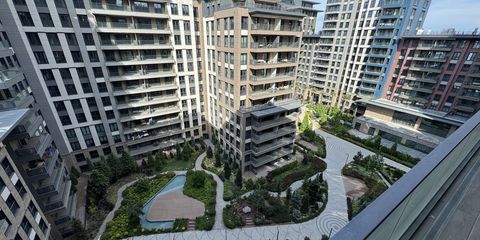
Property tax (emlak vergisi) is usually the smallest line an owner pays in Turkey. It is also the most forgotten, the most often left late, and the one that most reliably produces a nasty surprise at the land registry. Owners who discover years of accumulated debt on the day they hear "the municipality needs to certify there are no arrears" are not rare.
This guide is about property tax in Turkey — the emlak vergisi levied by Turkish municipalities under the Property Tax Law, not the property or council tax of any other country. If you are looking for a US county tax portal or a UK council tax band, this is not that.
Because the amount looks small, most owners know what they pay but not what they are paying it on. The practical side: when it is due, how the rates work, how to pay from abroad, who genuinely qualifies for exemption, what happens when you buy or sell, and what the consequences of ignoring it look like. If your bill jumped sharply this year, that has its own explanation: 2026 was a reassessment year, which we cover separately in Turkey's 2026 property tax reassessment.
Two payment windows: March–May and November
Property tax is paid in two equal instalments:
- First instalment: March, April and May. You have a three-month window; pay by 31 May and nothing is late.
- Second instalment: November. This window is a single month, and this is the instalment people miss.
You pay the municipality where the property sits, not the tax office. A flat in Bahçelievler means Bahçelievler Municipality; a shop in Başakşehir means Başakşehir Municipality. An owner with property in several districts therefore deals with several municipalities separately. It is exactly that scattering that lets one instalment slip.
Payment channels include the municipalities' own websites, contracted banks, their counters, and in many municipalities the e-Devlet portal. For owners living abroad, the practical approach is to clear both instalments together in May — nothing in the law prevents paying ahead. If nobody is opening your post in Turkey, this is one of the routine items a property manager handles on your behalf, along with checking that the municipality's record of your property is correct.
The rates: everything doubles inside Istanbul
Rates are set by the Property Tax Law and are applied at double inside metropolitan municipality boundaries and their adjacent areas. All of Istanbul falls inside metropolitan boundaries, so for any property discussed on this site, the right-hand column applies.
| Property type | General rate | Inside metropolitan boundaries |
|---|---|---|
| Residential dwelling | 0.1% | 0.2% |
| Business premises and other buildings | 0.2% | 0.4% |
| Building plot (arsa) | 0.3% | 0.6% |
| Agricultural land (arazi) | 0.1% | 0.2% |
The most consequential distinction here is between building plot and agricultural land. Land that has been parcelled by the municipality, zoned and is suitable for construction counts as arsa and attracts the highest rate in Istanbul at 0.6% — three times the residential rate. Land of an agricultural character is arazi and pays 0.2%. Two identical-sized pieces of ground can carry entirely different bills on this single line, and this is why a plot whose zoning status changes suddenly costs far more to hold.
The second distinction is between residential and commercial use. If you have let your flat as an office, a clinic or a consultancy rather than as a home, its actual use moves it into the "other buildings" group. The rate then goes from 0.2% to 0.4%. The additional rent that commercial use brings should be covering that additional tax.
What the tax is calculated on
Property tax is not calculated on what you paid for the property. It is calculated on the tax value recorded in the municipality's register, which has two components. The first is a land-share value: per-square-metre street-level values set by assessment commissions every four years, multiplied by your share of the plot. The second is a building value, derived from annually published construction cost figures and adjusted for the building's class, age and gross area.
A simple calculation: a home in Istanbul with a registered tax value of ₺3,000,000 pays 0.2%, so ₺6,000 a year, or ₺3,000 per instalment. The same value as business premises comes to ₺12,000. On top of that, inside metropolitan municipalities a contribution to the protection of cultural property accrues at 10% of the property tax — ₺600 on the home above, making ₺6,600 in total.
The tax value does a second job that matters far beyond this tax: the sale price declared at the land registry cannot be below the municipality's tax value. The penalty for under-declaring is covered in declaring the real sale price at the title deed. Turkey's 2026 property tax reassessment explains how to check your own tax value and correct it if the register is wrong.
Exemption: it exists, but it is not automatic
This is the most widely misunderstood part of the system, and for foreign owners it is usually the shortest conversation. A reduced (zero) rate can apply to people with no income at all, people whose income consists solely of a pension from a Turkish statutory social-security institution, veterans, people with disabilities, and the widows and orphans of those killed in service.
For the first two groups, the income itself is part of the definition: add a regular rental income, business profit or salary alongside the pension and the person falls outside it. The property conditions then apply to every group, together:
- Owning a single dwelling within the borders of Turkey. A second flat, a holiday home or a share in another residence breaks this condition.
- The dwelling's gross area not exceeding 200 m².
- The dwelling not being let out. A pensioner who lets their only flat and lives elsewhere cannot use the relief.
The relief does not apply itself — you must apply to the municipality with the relevant declaration form. It is the first thing we say to an owner who has been paying for years while meeting the conditions. The reverse duty is yours too. If the conditions later break because you let the property or buy a second one, you must tell the municipality. Failing to do so produces a penalised retrospective assessment.
There is also a temporary relief in the law for newly built dwellings not exceeding 200 m², applying to part of the tax for five years from the budget year following completion. Its scope and rate are set out in the law itself. If you have just taken delivery of a flat from an urban-renewal scheme, ask your municipality whether it applies to you and whether a notification is required.
Buying and selling: notification and arrears
When you buy, you must file a declaration. The land registry transfer does not automatically reach the municipality. The property tax declaration is submitted to the municipality within the budget year in which you acquired the property. If you acquired it in the final three months of the year, the deadline is three months from the transfer date. Your liability then starts from the budget year following the transfer: the tax for the year you bought belongs to the seller, the next year's is yours.
When you sell, you must clear the debt. The land registry requires a certificate from the municipality confirming there are no property tax arrears. More than that, the law makes transferor and transferee jointly liable for unpaid property tax relating to the year of sale and prior years. In plain terms, a buyer can end up paying a debt the seller left behind — with a right of recourse against the seller, but only after the fact. For anyone buying in Turkey, a municipal arrears check belongs at the top of the due-diligence list; more on the wider process in the foreigner's guide to buying in Istanbul. Arrears discovered the day before a land registry appointment are the most avoidable reason a transfer gets postponed.
Who pays the environmental cleaning tax (çevre temizlik vergisi)?
Short answer: in a let home, the tenant pays it, not the owner — because the taxpayer for this charge is whoever actually uses the building, not who owns it.
For homes, the environmental cleaning tax does not arrive as a separate bill; it is calculated on water consumption and collected as part of the water bill. A tenant who puts the water account in their own name pays the tax within it. If a departing tenant never transfers the account and the bill stays in your name, this charge comes back to you along with the water bill of an empty flat.
For business premises it works differently: the municipality assesses a fixed annual amount according to the premises' group and grade, usually payable in the same instalment periods as property tax. The taxpayer is still the occupier, meaning the tenant business. For a vacant shop, though, the municipality's counterparty is the owner directly.
Making it explicit in the lease who carries this and the other running charges closes off the most common source of argument during a tenancy. The full breakdown is tabulated in who pays the aidat, and the clause itself in what a Turkish rental agreement must include.
What happens if the bill goes unpaid
Unpaid property tax does not quietly disappear. The debt accumulates and a late-payment surcharge runs on top of it. The consequences arrive in this order:
- Late-payment surcharge. A monthly surcharge accrues on any amount unpaid at its due date under the public receivables law. The rate changes from time to time, so the figure has to be checked with the municipality. The mechanism never pauses, though: the debt grows for as long as it stands.
- The separate consequence of not declaring. If you never filed the declaration when you bought, the tax is assessed retrospectively with penalties.
- A blocked transfer. You cannot sell until the debt is cleared. In a sale that is already on a deadline, this weakens your negotiating position directly.
- Enforcement. The municipality can pursue the debt through enforcement proceedings and register a lien against the property.
The good news is that municipalities often offer restructuring for accumulated arrears, and the amount is usually smaller than feared. The bad news is that finding out on the day a land registry appointment is booked means paying first and then waiting for the certificate, and the transfer will not complete at that appointment.
The valuable housing tax (değerli konut vergisi) sits on top
Homes whose tax value exceeds a threshold set in the law attract a separate tax in addition to property tax: the valuable housing tax. The threshold and bands are revised each year by the revaluation rate, so confirm the current year's figures with the Revenue Administration. The 2026 threshold is given in our 2026 reassessment guide.
How it runs, briefly: where a residential property's building tax value exceeds the threshold, a declaration is filed in February of the following year. The tax is paid in two equal instalments, in February and August. The law provides a separate exception for owners of a single dwelling. Because the threshold moves each year and building tax values rise each year too, a home outside the scope one year can fall inside it the next.
An empty property pays the same tax
The most irritating feature of property tax is that it accrues whether or not the property earns anything. Your let flat and the flat that has stood empty for three years pay exactly the same. The only difference is that in the let flat, the rent covers it.
There is a further asymmetry. In a let residential property, property tax is a deductible item against your rental income if you choose the actual-expense method. How that works is in the rental income tax guide. So the same payment reduces your taxable base while the property is let, and simply leaves your pocket while it is empty.
The cost of an empty flat is never only the rent you are not collecting. Add the aidat (the building's monthly service charge), the environmental cleaning charge reverting to you, compulsory earthquake insurance and natural deterioration. On top of it all comes a property tax bill that arrives without fail every year. A property that taxes you annually and returns nothing is the expensive kind of vacancy, and the bill for postponing the decision is issued in two instalments. If you are weighing whether to let it, sell it, or simply find out what it is worth now, that starts with a free valuation.